Showing posts with label architecture. Show all posts

Monday, January 01, 2007


These are the steps up to the empty Syke Resevoir accessible from the public road past Syke ponds and Syke Common.

And this is the empty Syke resevoir which leaked from the get go. Home of orchids and in the spring some welcome duck.

Saturday, December 23, 2006

Hope Street Sunday School


These 150 year old buildings have been very effectively converted into housing.

Wednesday, November 29, 2006

Persimmon Homes, Newbold Way, Belfield

Persimmon Homes are building houses at Newbold. The sign tells the tale. What is basically a terrace house with a parking spot sells for about £165K.


A detached house sells for about £240K upwards.

This is modern housebuilding, low energy, (double glazed, low ceilings, well insulated, built on concrete rafts). The price (paid for on a mortgage) clocks up when you start specifying kitchens, bathrooms, conservatories.

Increasingly Persimmon have been peddling a form of 3 story ersatz vernacular architecture to build up density to meet the requirements for new houses. The front of this house with it's stuck on door is a mess with windows dottted about of different sizes.

Sunday, November 12, 2006

Buersil War memorial


At the entrance to Balderstone Park, this was being cleaned and shading trees removed and trimmed by a tree surgeon contractor when this photgraph was taken. RMBC have been very busy cleaning up War memorials this year.

There is a small memorial garden behind it.

The Eagle Hotel

The Eagle Hotel on Rochdale Road.

Sunday, November 05, 2006

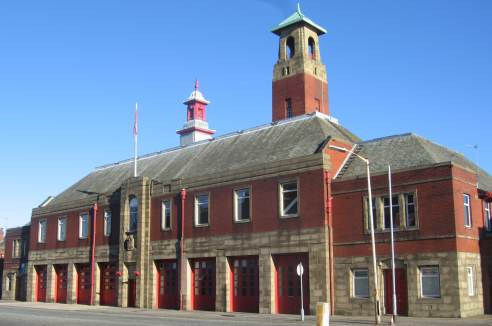
Rochdale Town Centre Fire Station


Built by A & T Howarth in 1933 when Maclure Road was unpaved.This included a small estate of house for Fire Station staff.

The plaque or cartouche has amusing sculptures of engines and ladders / appliances which the casual observer woul miss.

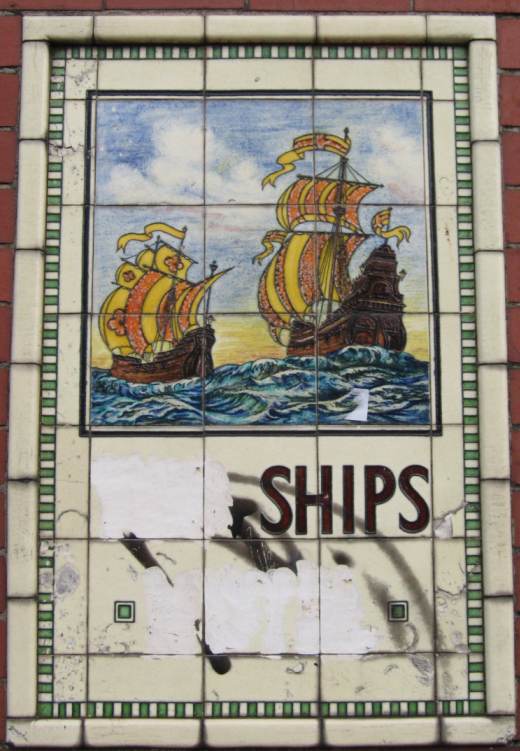
The Ex Two Ships Hotel


The two Ships Hotel,Hope Street, opposite the Methodist Chapel, previously of the now defunct Bury Brewery Company is now a private house. The stone carved bading bearing the pubs name and the brwery have been roughly ground off with a grinder as have some of the details on the ceramic plaque by the door.

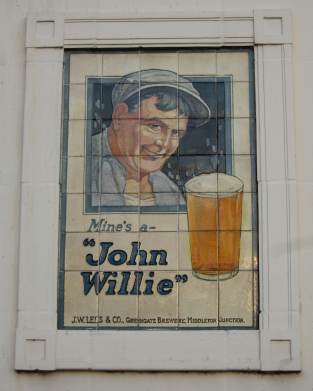
Architectural vandalism. cf the John Willie Lees sign at the Blue Pits, Castleton

Saturday, November 04, 2006

The Commercial, Castleton


The Commercial on Manchester Road, Castleton with rosy fingered dawn casting it's glow on the curtained windows. Just how many TV aerials does one pub need ?

Ex- Castleton Police Station


Castleton Police Station. A typical mid war Acccrington Brick and dressed stone Public Building, which is now owned by a Housing Association.
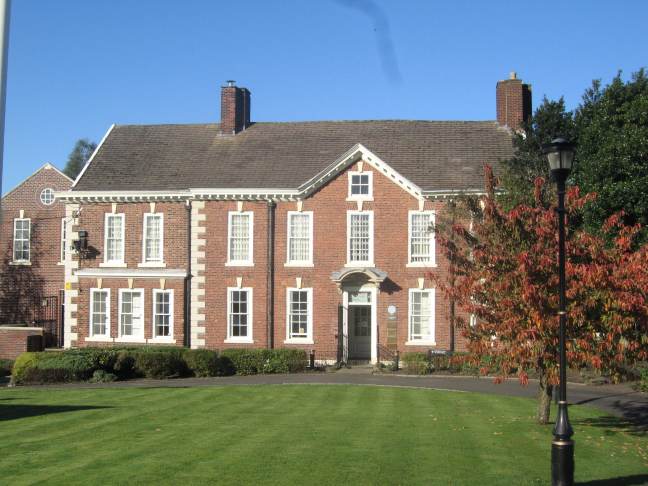
The inset shows a heraldic plaque inset in the front gable. Presumably the 3 English Lions puissant (?)

John Willie Lees Wall Plaque


This beautiful ceramic tile display is on the south wall of the Blue Pits Inn at Castleton. The Blue Pits relates to the blue marl pits in the area from which nutrient rich clay (marl)was dug and used as an agricultural fertilizer. Marl pits date to the post-medieval period and their existence is often evident through field and place names.

J W Lees beer , although endorsed as "real ale" by CAMRA is vile stuff.

Thursday, November 02, 2006

St Chad's Vicarage (original)


Samuel Dunster, built what is now the old Vicarage, in 1726 - currently it houses the Rochdale Business Bureau, although at great cost it temporarily held the Museum, which was moved at even greater cost to the Touchstones Centre, which was th Libarray which was moved at great cost and inconvenience to the Wheatsheaf Centre where it is impossible to find.

William Hay was appointed Vicar in 1819 after he, as the Salford Hundred's principal Magistrate had sent in the Cavalry to quell what he saw as a riot in Manchester. It was afterwards called the Peterloo Massacre. This so called riot was a meeting about the lack of jobs for men. Machines had meant a reduction in the work-force and yet large numbers of men had returned from the war with Napoleon.

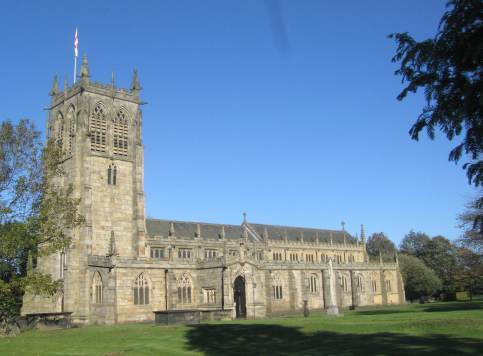
ST Chad's Church


St. Chad's parish Church, Rochdale with one of the gargoyles.

There was, the site indicates, a Church on Sparrow Hill long before 1194. A wall, reputedly of Saxon origin, still stands to the north of the present edifice. Legend insists that Rochdale was a town visited by St. Chad in 669 or 670 and to whom the Church has ever been dedicated. It is a legend unsupported by historical evidence, but it is not improbable: Rochdale was a town of some importance in the Middle Ages, as is evidenced by the establishment of a market in the year 1251. The local references to a Castle both in site, and in names like Castlemere and Castleton, indicate an importance for Rochdale that was not insignificant, and when the town expanded in the time of the Industrial Revolution, it remained one of the most important in this part of Lancashire.

The bottom of the Church tower together with the alternating round and octagonal pillars in the Nave date from the time of the first Vicar, Geoffrey of Whalley who was Vicar in the year 1194. He owed his appointment to the local de Lacy family, powerful representatives of the King.

The Church is known as a 'Double Apostle' building due to the number of arches, its size was doubled in the 1880's being completed in 1888 during Canon Maclure's incumbency. This had the effect of making the section alotted to the Choir slightly larger than that allotted to the congregation, the intention being to adopt the style of a Cathedral. The clerestory windows picture the Apostles.

The older parts of the church is built in millstone grit while the extension is of Yorkshire sandstone.

The Octingentenary (800 year anniversary) was marked on December 1st 1994 by a visit from Her Majesty, The Queen and His Royal Highness, The Duke of Edinburgh.

Bet Lynch was married here.

Monday, October 23, 2006

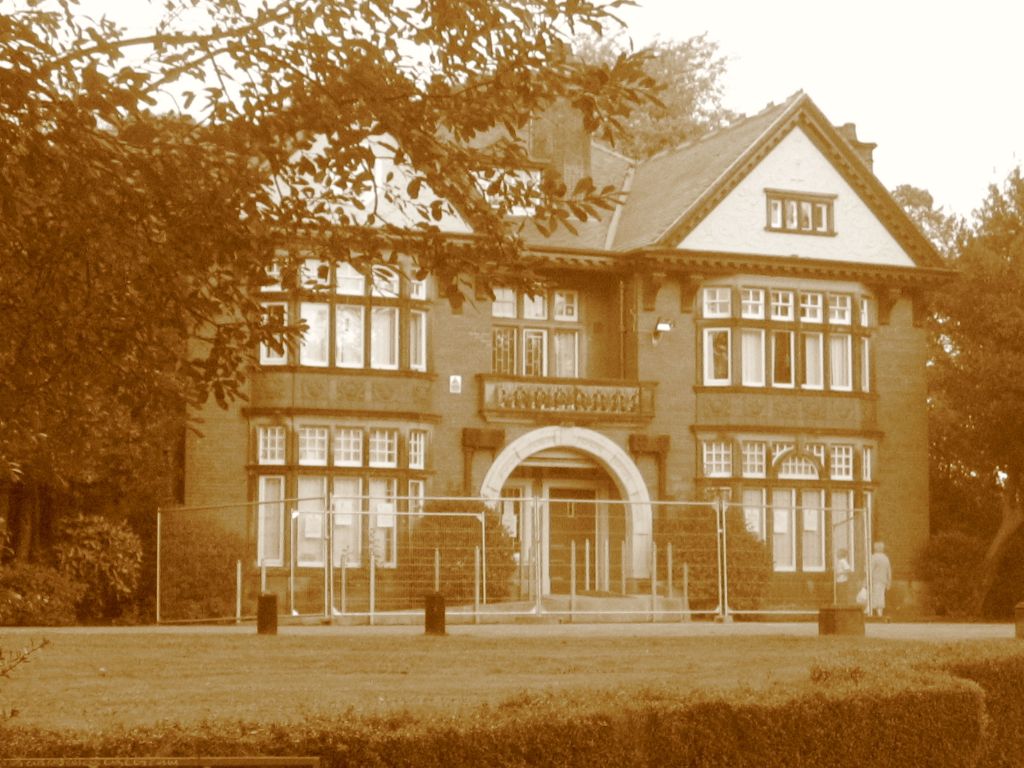
Denehurst Park


This handsome house was donated to the Borough by the Turner Famil along with extensive grounds. The maniacs who do these things are building a nasty galvanised steel railing guarded wheelchair ramp at the front of the building.

A building much vandalised by mindless, drug and alcohol crazed youth and by Borough Engineers.

Thursday, October 12, 2006

Rochdale Boundary Stone , Healey Stones

In the middle of the 19th Century a series of Boundary Stones were erected 1 mile from the centre (?) of Rochdale.
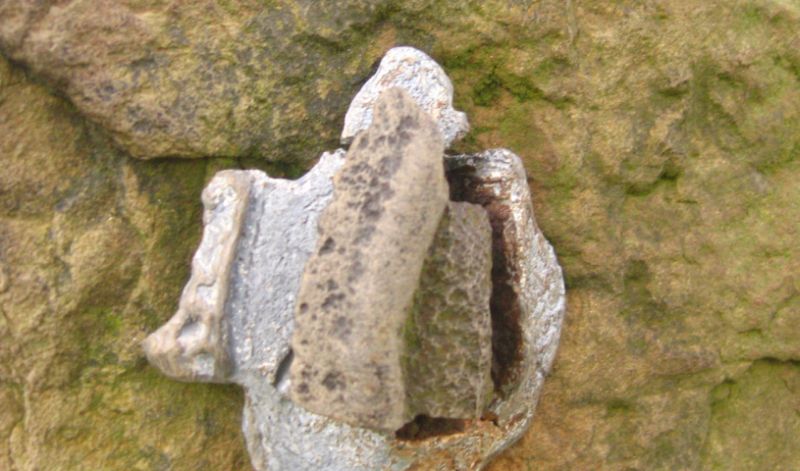
This is one near Healey Stones on the path by the second (and dry) Syke resevoir.

The remnants of the cast iron plate lugs set in lead can be seen. At the onset of WWII, to confuse any arriving German parachutists, the plaques were destroyed and have not been replaced.

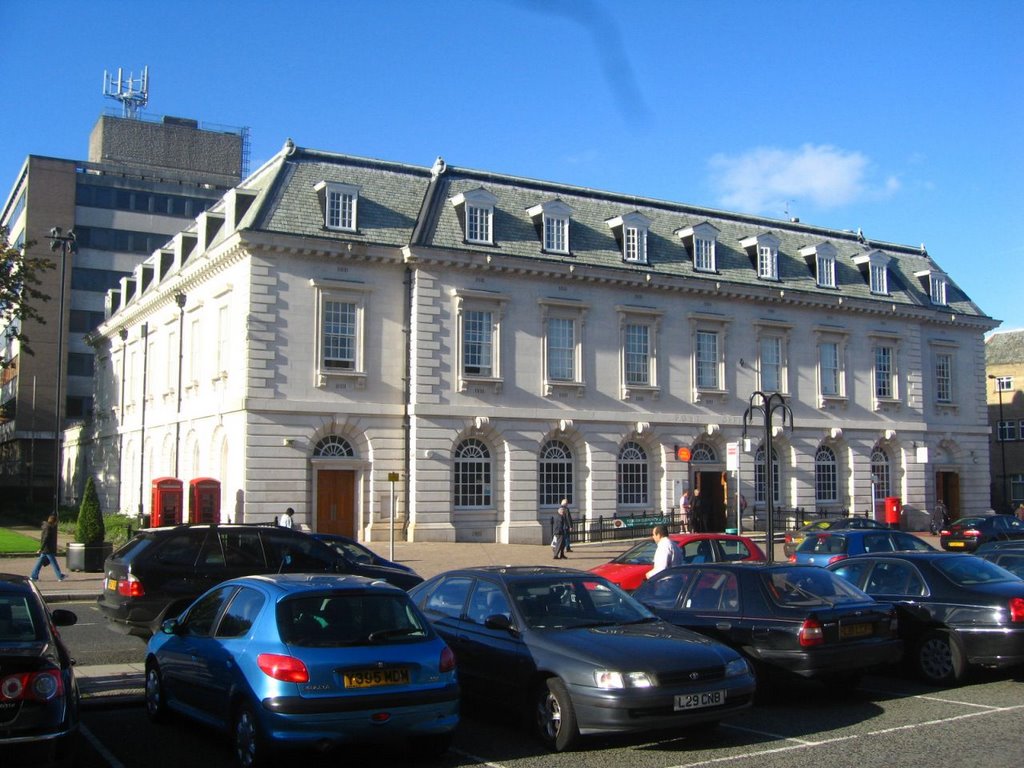
Rochdale Post Office

The Post Office on the Esplanade in the centre of Rochdale was built in 1927 by the famous firm of R & T Howarth, who built many familiar buildings in Rochdale.
The building was cleaned earlier this year and now houses the Post Office again. This was previously moved in an insane arrangement with property speculators and stupid Councillors to the rear of Woolworth's for a while.

Today's users have to struggle past the massed ranks of drug dealers, well equipped with their ubiquitous mobile phones to summon up deliveries .... handily placed for the Police Station.

Friday, October 06, 2006

Watergrove Resevoir

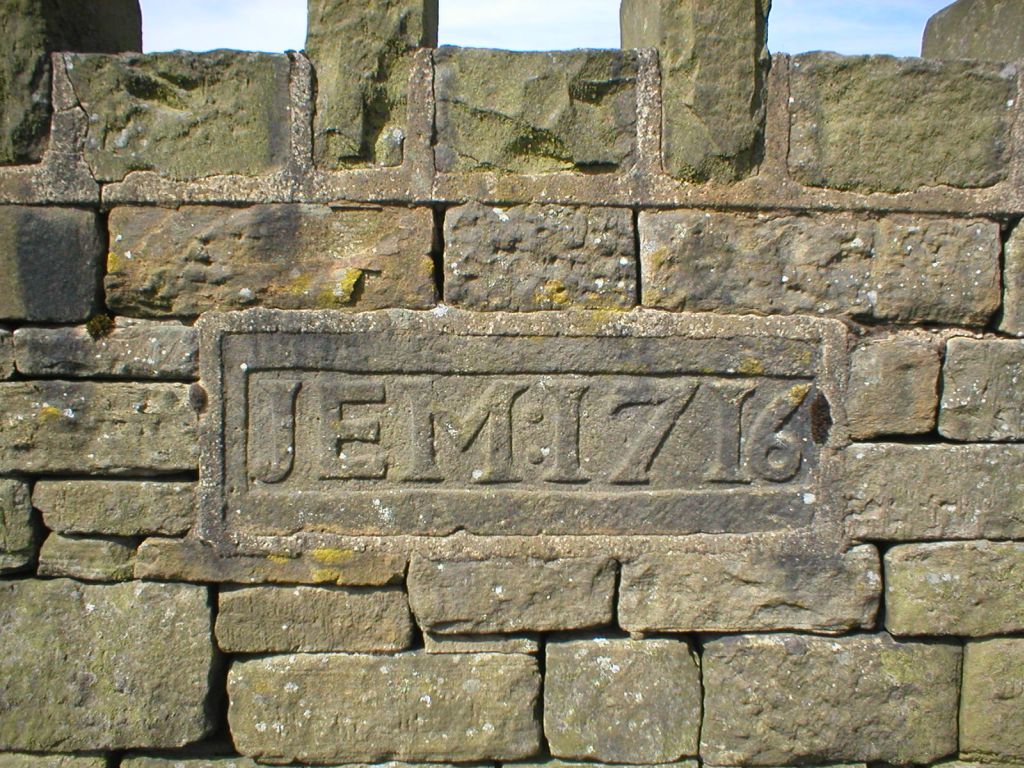
This is the dated lintel from a property inundated when Watergrove village was flooded to make Watergrove Resevoir. It is set into the perimeter wall.

The Resevoir is now home to the West Pennine Sailboard Club.